9543 Bee Caves Rd, Austin, TX, 78733
Bonded & Insured
Austin, TX

Siding Contractor in Austin, TX Built for Heat, Hail & Hill Country Homes

Austin's weather is hard on a house's walls. You get dozens of 100°F days, UV readings of 10 or higher, spring hail and sudden downpours. South and west walls fade, vinyl warps, and 1990s hardboard swells at every butt joint. A lot of the damage starts where nobody looks, like a missing kick-out flashing or a window sill that was never sealed. Lake Austin Siding Group installs, replaces and repairs siding with these conditions in mind. We put as much care into the water-resistive barrier and flashing as we do into the finish you see from the street.

We're based around Lake Austin and west Austin, and that's where most of our work is. We know the hillside lots in West Lake Hills, the limestone-and-cedar custom homes in Rollingwood, the mixed facades in Sunset Valley and the 1980s hardboard houses in Shady Hollow. A lot of homes here combine stone, stucco and siding. When we add new fiber cement, James Hardie, engineered wood or board and batten, we match it to what's already on the house. Every project comes with color guidance and a detailed written scope.

  • Serving Austin homeowners since 2020
  • Bonded
  • Fully insured
  • Financing available
Free Estimate

Request Your Free Estimate

No obligation. Fast, honest quotes.

Prefer to talk? Call (512) 812-9002 — your details are never shared.

Credentials & Certifications BondedInsuredFinancing available
What We Do

Siding Services for Every Austin Home Style

Choosing the right siding depends on the house. A Hyde Park bungalow, a Pflugerville tract home and a West Lake Hills modern each need something different. We install, replace and repair every major material, and we choose details based on your home's sun exposure, soil, slope and any HOA or historic rules.

Siding Installation

Full siding installs on new construction, additions and full re-sides, from the sheathing out.

We inspect the sheathing, install the water-resistive barrier, flash windows and rooflines, set ground and roof clearances, and fasten to manufacturer specifications.

Every install is detailed for Austin's sudden rain, clay soil movement and intense UV, with the flashing that a lot of fast-built subdivisions never got.

Best for: Additions, new builds and homeowners re-siding the entire house.

Explore
★ Specialty

James Hardie Siding Installation

James Hardie lap, panel and shingle installation, including pre-finished color options.

We follow Hardie's installation guidelines for clearances, joint flashing, gapping and sealing cut edges, so the planks hold up the way they're supposed to.

Hardie is fire-resistant, termite-proof and stands up to the heat, which makes it the top choice for replacing hardboard in Jollyville and Shady Hollow and for HOA-approved updates in Circle C Ranch.

Best for: Homeowners who want a durable, low-maintenance siding that won't rot, accepted by most HOAs.

Explore

Fiber Cement Siding Installation

Fiber cement lap, panel and trim systems from leading manufacturers.

Correct gapping, joint flashing and sealed cut edges, plus enough ground clearance to deal with Austin's splash-back.

Fiber cement holds up to hail better than vinyl and won't feed termites, which matters a lot east of I-35 and in older wood-sided neighborhoods.

Best for: Homeowners who want rot and pest resistance at a mid-range budget.

Explore

Hardie Plank Siding Installation

HardiePlank horizontal lap siding in smooth and wood-grain textures.

Blind or face nailing per spec, flashed butt joints and properly sealed trim transitions.

This is the standard choice for side and rear elevations on production homes in Pflugerville, Manor and Buda, and for replacing failed Masonite like-for-like in appearance.

Best for: Hardboard replacement and traditional lap-siding looks.

Explore

Hardie Board Installation

HardiePanel and HardieTrim board installation for panel walls, gables and trim packages.

Panels are fastened to the layout with flashed horizontal joints and gaps sized for movement.

A good fit for gable ends on Allandale and Crestview ranch homes, where old hardboard sits above limestone wainscot.

Best for: Gables, accent walls and complete trim systems.

Explore
★ Specialty

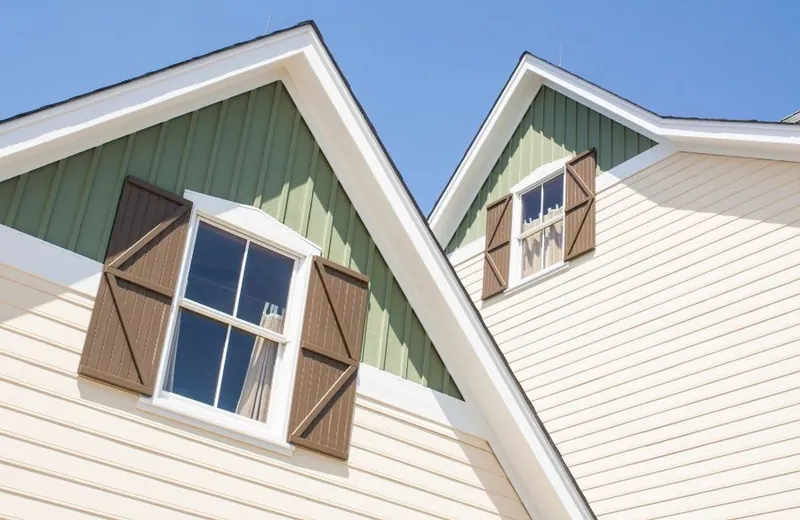
Board and Batten Siding Installation

Vertical board and batten in fiber cement, engineered wood or cedar for modern farmhouse and Hill Country looks.

We lay out batten spacing ahead of time, use a vented rainscreen where it makes sense, and flash horizontal transitions.

Board and batten is one of the most requested looks for central Austin infill and Rollingwood remodels. We blend it cleanly with Austin limestone and stucco.

Best for: Modern farmhouse, Hill Country and mixed-material facades.

Explore

Board and Batten Exterior Installation

Board and batten across a full exterior, including matching soffit, trim and accent details.

We plan coordinated batten layout around windows, corners and rooflines so the lines stay continuous.

Good for full exterior updates on 1970s ranches being modernized in Tarrytown and Windsor Park.

Best for: Whole-house style transformations.

Explore

Vertical Siding Installation

Vertical panel and plank siding systems in fiber cement, metal and wood.

Furring and blocking where needed, plus horizontal joint flashing and drainage at the base.

Suits contemporary designs in Mueller and west Austin, where vertical lines make multi-story walls look taller.

Best for: Modern elevations and accent sections.

Explore

Modern Siding Installation

Contemporary facades using large-format panels, mixed materials and darker heat-rated colors.

Reveal trims, open-joint or rainscreen systems, and precise layout lines.

Built for Austin's modern infill and Hill Country contemporary homes, using products that can handle 100°F walls and reflected sunlight.

Best for: Architect-driven designs and bold color schemes.

Explore

Engineered Wood Siding Installation

LP SmartSide and similar engineered wood lap, panel and trim installation.

Sealed cut edges, required clearances and the manufacturer's fastening rules.

Gives a real-wood look at lighter weight. It's common on Bee Cave and Hudson Bend homes and in board-and-batten designs.

Best for: Homeowners who want a wood look at a lower cost than cedar.

Explore

Wood Siding Installation

Wood lap, drop and shiplap siding, either new or matched to existing profiles.

Back-priming, stainless or galvanized fasteners and careful profile matching.

Important for historic homes in Hyde Park, Clarksville and Travis Heights, where design standards favor replacing wood with wood.

Best for: Historic homes and authentic restorations.

Explore

Cedar Siding Installation

New cedar lap and channel siding, plus replacing rotted cedar.

We use rainscreen gaps, sealed end grain and finishes rated for heavy UV.

Cedar is common on West Lake Hills and Barton Creek homes. We replace boards damaged by rot and woodpeckers and blend them in with existing stain.

Best for: Upscale and natural Hill Country exteriors.

Explore

Cedar Shake Siding Installation

Cedar shake and shingle siding for gables, dormers and full walls.

Staggered coursing, proper exposure and breathable underlayment.

Adds texture to Craftsman gables in central Austin and to accent walls on lake homes.

Best for: Craftsman, cottage and accent designs.

Explore

Metal Siding Installation

Standing seam and corrugated metal siding for walls and accents.

Concealed-fastener or exposed-fastener systems with clips that allow for expansion and sealed transitions.

Standing seam is a signature of modern Hill Country design in Rollingwood and Hudson Bend. It doesn't burn, rot or attract termites.

Best for: Modern, industrial and ranch aesthetics.

Explore

Aluminum Siding Installation

Aluminum siding repair, matching and replacement.

Panel-by-panel replacement, or a full re-side when matching panels aren't available.

Mostly for older Austin homes with hail-dented aluminum that need repairs or an upgrade.

Best for: Homes with existing aluminum siding.

Explore

Vinyl Siding Installation

Vinyl and insulated vinyl siding installation.

Loose nailing for expansion, correct overlaps and heat-rated products in darker colors.

A budget-friendly option in Del Valle, Manor and rural areas where HOAs allow it. We'll point out walls where Low-E reflections could warp it.

Best for: Cost-conscious homeowners where HOAs allow vinyl.

Explore

Stone Veneer Siding Installation

Stone veneer wainscots, accent walls and columns.

Drainage plane, weep screed and properly lapped transitions to the siding above.

Ties new siding in with the Austin limestone look common on west Austin and Circle C homes.

Best for: Wainscots, entries and mixed-material facades.

Explore

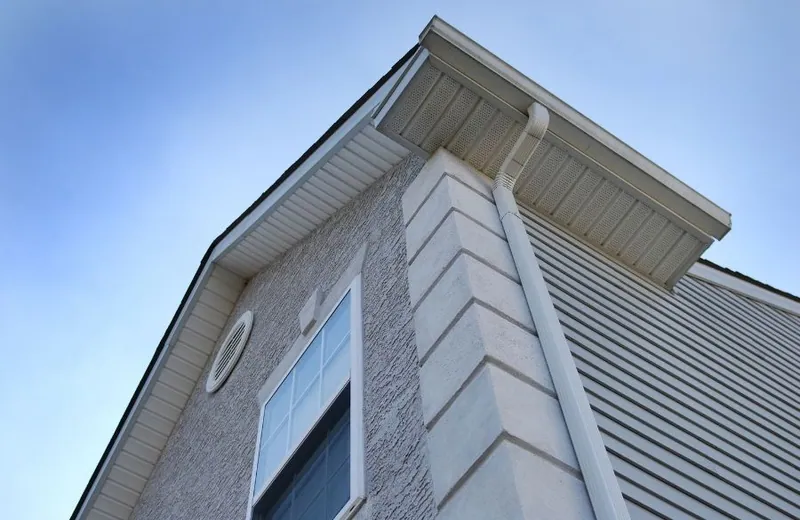
Soffit and Fascia Installation

Replacement of rotted soffit and fascia using fiber cement, wood or aluminum.

Vented soffit for attic airflow, sealed fascia joints and drip edge coordination.

Austin's heat makes attic ventilation important. Rotted fascia under leaky gutters is one of our most common repairs.

Best for: Rotted eaves, pest entry and attic ventilation issues.

Explore

Exterior Trim Installation

Window, door, corner and frieze trim replacement.

Head flashing, sealed joints and rot-resistant trim materials.

Window sills and trim on sun-facing walls in Austin fail first. New trim keeps water out of the wall.

Best for: Rotted trim and curb-appeal refreshes.

Explore

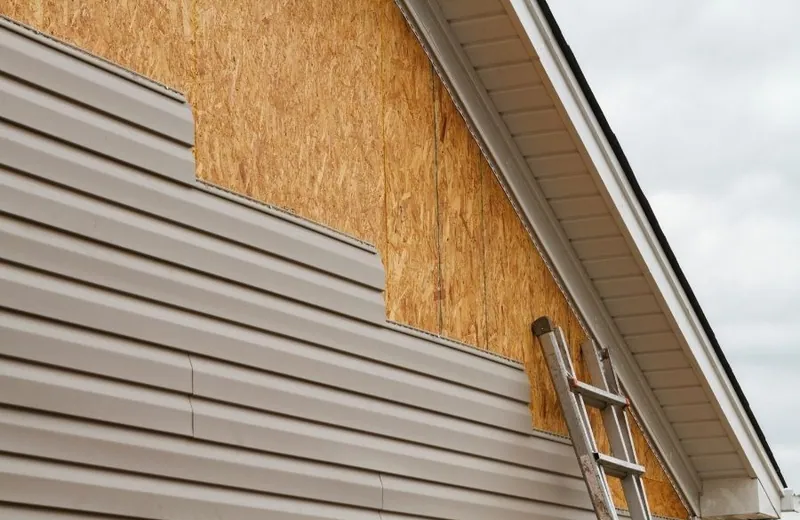
Siding Replacement Services

Complete removal and replacement of failing siding.

Tear-off, sheathing repair, new WRB and flashing, then the new siding system.

Our most common job in 1980s–90s neighborhoods with hardboard and T1-11, and on hail-damaged suburban homes.

Best for: Widespread rot, hail damage or outdated materials.

Explore

Siding Repair Services

Targeted repair of rotted, cracked or damaged sections.

Cutting out damaged pieces, fixing the substrate, and matching profile and finish.

Fixes base-of-wall rot, kick-out leaks and isolated hail damage before the whole wall fails.

Best for: Localized damage on otherwise sound siding.

Explore

Siding Inspection and Consultation

A detailed assessment of your siding's condition, material options and next steps.

Probe testing, moisture checks at likely failure points, and photo documentation.

Useful before you buy or sell, after hail, or when you're planning around HOA or historic rules.

Best for: Buyers, sellers and anyone unsure whether to repair or replace.

Explore

Asbestos Siding Removal and Replacement

Re-siding homes that have asbestos-cement shingles.

Removal handled under Texas DSHS asbestos rules, followed by full re-siding.

Common on 1940s–60s central Austin homes, often with lead-paint wood siding underneath.

Best for: Older homes with cracked asbestos-cement shingles.

Explore

Mobile Home Siding Replacement

Siding replacement for manufactured homes.

Material and fastening suited to manufactured-home framing.

Serves rural properties around Webberville, Creedmoor, Garfield and Mustang Ridge.

Best for: Manufactured and mobile home owners.

Explore

Commercial Siding Installation

Siding for small commercial, office and multifamily buildings.

Scheduling that keeps the business running, plus durable commercial-grade systems.

For Austin's growing retail and small office properties that need heat- and hail-resistant facades.

Best for: Property owners and small commercial buildings.

Explore
Know The Signs

Common Siding Problems We See Across Austin

Most siding failures around Austin come back to a few local causes: sun, water, moving soil and shortcuts during construction. Below are the problems we find most often, why they happen here, and what to watch for before a small repair turns into a whole wall.

Swollen, Rotting Hardboard (Masonite) and T1-11 Serious

Hardboard lap siding and T1-11 plywood panels were made from wood fibers and veneers. Once water gets past the paint, they soak it up. The bottom edges swell, the faces delaminate, and the siding eventually turns soft and crumbles.

Why it's common here

Builders used hardboard and T1-11 on a huge number of homes during the 1980s–90s boom in North and Southwest Austin. These boards are now 30 to 40 years old. Austin's heavy rain bursts soak them, the summer heat bakes the paint until it cracks, and humid springs keep wet edges from drying out. Sprinklers and mulch beds piled against the walls speed it up. Pulling it off often uncovers sheathing rot or termite damage that no one could see beforehand.

Signs you'll notice
  • Swollen or flared bottom edges on lap boards
  • Mushy spots that give under thumb pressure
  • Paint peeling at butt joints and nail heads
  • Wavy or delaminating panel faces
  • Visible fungal growth or dark staining
  • Gaps opening between boards
Local patterns

This is especially common in Jollyville, Wells Branch, Shady Hollow and older parts of Pflugerville and Southwest Austin. The worst damage tends to be on walls next to sprinklers, on north sides that stay shaded and damp, and along the lowest two courses near the ground.

Our fix: Remove the hardboard, check and replace rotted sheathing, put in a new water-resistive barrier, and install fiber cement or engineered wood with the right ground clearance.

Hail-Cracked and Dented Siding Serious

Hail impacts crack or punch holes in vinyl, dent aluminum and metal, and chip or fracture fiber cement. Hits that look minor can still break the paint film or the substrate, which lets water reach the wall.

Why it's common here

Central Texas is in a hail corridor, and supercells from March through June regularly drop quarter- to golf-ball-size stones. One storm can damage siding across an entire neighborhood in Pflugerville or Circle C Ranch in a few minutes. Vinyl that has gone brittle after years of UV breaks much more easily. Storm chasers usually show up within days, and partial replacements get tricky when the original profile or color has been discontinued.

Signs you'll notice
  • Holes or spiderweb cracks in vinyl panels
  • Dents on aluminum siding, trim or gutters
  • Chipped corners or spalled spots on fiber cement
  • Spatter marks concentrated on one elevation
  • Torn window screens and dented AC fins nearby
  • Granules from the roof collected in gutters
Local patterns

We see heavy spring damage in Pflugerville, Manor, Avery Ranch and Buda, where many homes have vinyl or fiber cement on the sides and rear. West-facing walls usually take the most hits, since storms tend to move in from the west.

Our fix: Photograph and document the damage for your adjuster, then replace damaged courses or whole elevations, matching profile and color as closely as we can.

Missing Kick-Out Flashing and Hidden Wall Rot Serious

A kick-out flashing sends roof runoff away from the wall where a roof edge meets a sidewall. When it's missing, water runs down behind the siding every time it rains and rots the sheathing and framing without being seen.

Why it's common here

During the 2000s–2020s, production builders in Austin's suburbs put up homes quickly. Kick-out flashing, proper roof-to-wall clearance and sealed cut edges were often skipped. Austin's rain comes in short, intense bursts, so a single storm can push gallons down a roof valley and into one spot on the wall. The damage builds for years before a stain or soft patch finally shows up inside.

Signs you'll notice
  • Streaking or staining below roof-wall intersections
  • Swollen siding or trim beneath a roof edge
  • Drywall stains or musty odor inside
  • Peeling paint in a vertical stripe
  • Soft sheathing when pressing on siding
  • Siding cut tight against shingles
Local patterns

This is common in two-story tract homes in Falcon Pointe, Manor's Shadowglen, Sunfield in Buda and Del Valle subdivisions. It also shows up on west Austin customs that have complicated rooflines with lots of roof-to-wall transitions.

Our fix: Remove siding at the problem area, replace rotted sheathing, install kick-out flashing and step flashing correctly, and reinstall siding with proper clearance.

Sun-Side Paint Failure and Warped Vinyl Moderate

Paint and stain on south- and west-facing walls chalk, fade and peel years earlier than on shaded sides. Vinyl in the same spots can buckle, oil-can or even melt when reflected sunlight concentrates on it.

Why it's common here

Austin's UV index sits at 10 to 11 or higher through the summer, and wall surfaces on long 100°F days get far hotter than the air. The darker charcoal and black colors that are popular in modern Austin designs absorb even more heat. Low-E windows on neighboring houses can focus sunlight onto a wall and distort vinyl that isn't rated for heat. Any material that isn't built for these conditions breaks down quickly.

Signs you'll notice
  • Chalky residue when you rub the wall
  • Faded color on south and west elevations only
  • Wavy, rippled or sagging vinyl panels
  • Peeling or blistered paint on trim
  • Cracked caulk lines that pulled away
  • Bare wood showing on cedar siding
Local patterns

This shows up all over the area. It's most visible on newer homes in Mueller and Steiner Ranch with darker vinyl or painted panels, and on cedar-sided homes in Barton Creek and West Lake Hills where afternoon sun hits the walls.

Our fix: Use factory-finished fiber cement, heat-rated vinyl, or properly primed and painted materials, and choose colors and products that suit the wall's sun exposure.

Foundation-Driven Buckling and Open Joints Moderate

Expansive clay soils swell when wet and shrink when dry, and the foundation moves with them. That movement racks the wall framing, which buckles siding, cracks fiber-cement planks, opens butt joints and tears caulk lines.

Why it's common here

East of I-35, most of the ground is Houston Black and similar high shrink-swell clay. Austin's pattern of long droughts broken by heavy rain moves these soils a lot from season to season. Siding installed with too little clearance to grade, or with no room for movement, breaks up first. Poor drainage around the house makes every cycle worse.

Signs you'll notice
  • Diagonal cracks in fiber-cement planks
  • Open or separated butt joints
  • Caulk torn at corners and windows
  • Siding bowing near the foundation line
  • Doors and windows sticking seasonally
  • Gaps at trim boards and corner posts
Local patterns

Most common in Del Valle, Manor, Pflugerville, Webberville and East Austin neighborhoods like Windsor Park. It tends to get worse after drought summers and the wet Octobers that follow.

Our fix: Replace cracked planks, re-detail joints and caulk, restore proper ground clearance, and coordinate with drainage or foundation repairs where movement is still happening.

Termite, Woodpecker and Base-of-Wall Rot on Wood Siding Moderate

Cedar and other wood siding gets attacked from both directions. Subterranean termites tunnel up from the soil, woodpeckers drill holes, and fungal rot spreads where the boards stay damp near mulch, patios or sills.

Why it's common here

Austin's humid spring and fall keep wood wet, and subterranean termites, including Formosan pockets in Central Texas, thrive here. Homes along greenbelts get regular woodpecker damage to cedar. Older bungalows often have siding that sits only inches from the soil, which gives termites an easy way in.

Signs you'll notice
  • Mud tubes on foundation or siding
  • Round holes or chiseled cavities in cedar
  • Soft, crumbling boards at the wall base
  • Rot at window sills and door trim
  • Hollow sound when tapping boards
  • Sawdust-like frass below siding
Local patterns

Common in Travis Heights, Bouldin Creek and Tarrytown bungalows, and in cedar homes near the Barton Creek and Bull Creek greenbelts in West Lake Hills and Rollingwood.

Our fix: Cut out damaged boards, replace them with matching cedar or durable fiber cement, raise clearances, and work alongside your pest professional.

Damaged Asbestos-Cement Shingle Siding Emergency

Asbestos-cement shingles were commonly added over original wood siding from the 1940s through the 1960s. Intact shingles are fairly stable. Once they crack, break or get drilled, they can release fibers and need regulated handling.

Why it's common here

Many central Austin homes were re-sided with asbestos-cement during the post-war decades. Seventy years of hail, ground movement and heat-cold swings have cracked a lot of them. Texas DSHS rules govern how they're removed, so trying to tear them off yourself is risky and may not be legal.

Signs you'll notice
  • Rigid, brittle shingles with a dimpled texture
  • Cracked or broken corners
  • Shingles about 12 by 24 inches with straight edges
  • Missing pieces exposing older wood beneath
  • Chalky gray surface under paint
Local patterns

We find these on 1920s–50s homes in Hyde Park, Crestview, East Austin and Clarksville, usually installed over the original wood drop siding.

Our fix: Stop any drilling or demolition. Arrange compliant removal under Texas DSHS rules, then re-side with materials suited to the home and any historic requirements.

Transparent Pricing

How Much Does Siding Cost in Austin?

Siding costs in Austin depend on material, wall area, what turns up behind the old siding, and how hard the site is to work on. The ranges below are typical for the local market. Your written scope will give you exact numbers for your home.

Typical Project

Targeted rot repair

Replace 40–80 sq ft of rotted siding and trim near a roof-wall intersection, add kick-out flashing, paint to match

$1,200 – $4,500
Typical Project

Soffit and fascia replacement

Single-story Austin ranch, roughly 150–200 linear feet of eaves in fiber cement or aluminum

$3,500 – $9,000
Typical Project

Hardboard-to-Hardie replacement

1990s two-story home in Wells Branch or Shady Hollow, ~1,800–2,200 sq ft of wall, includes sheathing allowance

$24,000 – $45,000
Typical Project

Premium Hill Country re-side

West Lake Hills or Rollingwood custom with cedar, board and batten or metal, multi-story walls and stone transitions

$55,000 – $120,000+
Siding Material Primary Factor

Material choice has the biggest effect on price. Vinyl is usually the lowest-cost option. Engineered wood and fiber cement, including James Hardie, sit in the middle and are the most popular choices in Austin. Cedar, standing-seam metal and modern panel systems cost the most. Pre-finished products cost more up front but save on painting, which matters on south and west walls where paint wears out faster in Austin's UV.

Hidden Sheathing and Framing Damage Primary Factor

On 1980s–90s homes with hardboard or T1-11, and on tract homes missing kick-out flashing, removing the old siding often uncovers rotted sheathing or termite damage. Nobody can see that until the wall is open. We include allowances and per-sheet pricing in the written scope so any extra repair work is clear and predictable, and we don't hand you an open-ended change order.

Home Size, Height and Site Access Secondary Factor

More square footage means more material and labor. Height and slope matter just as much. A two-story wall on a steep West Lake Hills or Hudson Bend lot needs scaffolding, extra staging and more crew time than a single-story ranch on a flat lot in Windsor Park. Tight side yards, retaining walls and pools also slow the work down.

Trim, Soffit, Fascia and Details Secondary Factor

Window and door trim, corner boards, frieze boards, soffit and fascia add to the total. Complex architecture with many corners, gables and roof-to-wall transitions takes more flashing and cutting. Blending new siding with existing stone or stucco adds labor too, but it's what keeps a mixed-material home looking like one finished design.

Regulatory and Hazardous Material Requirements Situational Factor

Homes built before 1978 require lead-safe practices, and asbestos-cement siding must be removed under Texas DSHS rules. Both add cost. Permits, HOA submittals and historic district review can add fees and time. Insurance-funded hail jobs follow the adjuster's scope, and Texas law requires you to pay your own deductible.

Financing is available, so you can deal with rot or hail damage now and spread the cost over time. Ask about options during your estimate. New siding protects the framing behind it, improves curb appeal before a sale and can reduce maintenance for years. In Austin's climate, installing it correctly matters as much as which product you choose.

Local Expertise

Why Austin Homes Need Siding Built for Central Texas

Siding that does fine in milder places tends to fail early in Austin. The heat, UV, hail, expansive clay and fast-built subdivisions all wear on it, and older housing adds its own problems. Each of these changes which material you should pick and how it needs to go on.

Climate: Triple-Digit Heat, Hail and Flash Floods

From June through September, Austin's highs average in the mid-to-upper 90s, and 2023 set the record for the most 100°F+ days. Summer UV regularly reaches 11. That breaks down paint and stain, chalks older vinyl, and makes dark vinyl oil-can or warp, especially where a neighbor's Low-E window reflects sunlight onto the wall. Rain totals 32 to 36 inches a year, but it often comes as several inches in a few hours. That's why the area is called Flash Flood Alley, and those storms test every flashing detail on a house. Spring supercells from March to June bring quarter- to golf-ball-size hail that cracks vinyl, dents aluminum and chips fiber cement. Then there are freezes like Winter Storm Uri in 2021. Swinging from hot to cold pulls caulk joints apart and uses up expansion gaps.

Built Environment: Bungalows to Hardboard to Hill Country Modern

Austin's housing is very mixed, so we plan each job around the house itself. Bungalows in Hyde Park, Travis Heights and Clarksville have original cedar or pine drop siding, often under layers of lead paint, and some have 1940s–60s asbestos-cement shingles. Ranch homes in Allandale, Crestview and Windsor Park pair limestone wainscot with wood or hardboard gables. The 1980s–90s boom put Masonite and T1-11 on thousands of homes in Jollyville, Wells Branch and Shady Hollow, and that siding is failing now. Builders in Pflugerville, Manor and Buda moved fast and often left out kick-out flashing or set siding too close to roofs and grade. Out west, homes in West Lake Hills and Hudson Bend combine limestone, stucco, cedar, metal and LP SmartSide on steep, multi-story lots.

Regulations, Historic Districts and HOAs

In Austin, the Development Services Department decides when siding work needs a permit. A like-for-like replacement is often minor work. Sheathing or framing repairs, a change in material, or work tied to new windows and doors can require a building permit under Austin's amended IRC and IECC. Homes built before 1978 fall under the EPA RRP lead-safe rules, and removing asbestos-cement siding falls under Texas DSHS rules. In historic districts like Hyde Park, Bouldin Creek and Travis Heights–Fairview Park, swapping original wood for another material usually needs Historic Landmark Commission review. West Lake Hills, Rollingwood, Bee Cave and Pflugerville each run their own permit offices. HOAs in Circle C Ranch, Steiner Ranch, Avery Ranch and Falcon Pointe often limit colors and materials, and some ban vinyl.

Market Context: Growth, Value and Choice

Austin's growth has crowded contractor schedules and raised labor costs. Summer heat also cuts safe working hours and slows how fast caulk and paint cure. Spending varies a lot across the area. Owners in Rollingwood and Barton Creek put premium materials and craftsmanship first. Families in Pflugerville and Del Valle are usually watching costs and working through hail claims. Most homeowners have already compared James Hardie, LP SmartSide and vinyl online before they call. With summer AC bills this high, better house wraps and insulated options are worth asking about. If you're selling, new siding and paint can noticeably improve how the house shows.

Lake Austin Siding Group Siding Contractor in Austin, TX project in Austin, TX (1)
Austin, TX
Lake Austin Siding Group Siding Contractor in Austin, TX project in Austin, TX (2)
6+ Years
Talk to a Local Expert
The Lake Austin Siding Group Difference

Why Austin Homeowners Choose Lake Austin Siding Group

Local Focus on Lake Austin and West Austin Homes

Most of our work is in Lake Austin, West Lake Hills, Rollingwood, Sunset Valley and Shady Hollow. That's lakeside and hillside property that gets strong sun, humidity and wind-driven rain off the water. Steep lots shed runoff onto the walls, multi-story elevations need careful staging, and premium materials don't leave room for mistakes. Since 2020 we've built our business on these conditions. The details we put on a house reflect how Austin weather actually hits it, not a one-size-fits-all approach carried over from another market.

Moisture Barriers and Flashing Done Right

Siding is only the outer layer. What keeps your walls dry is behind it: the water-resistive barrier, window flashing, kick-out flashing and correct clearances to the roof and ground. Many Austin homes built in a hurry skipped those steps, and their owners are paying for hidden rot now. We pay close attention to flashing at windows and rooflines on every job, because a few inches of Flash Flood Alley rain in an afternoon will find any gap that's left.

Seamless Blending with Stone, Stucco and Existing Finishes

A lot of Austin custom homes use limestone, stucco and siding on the same wall. Replacing one section shouldn't make the house look patched. We plan transitions, trim reveals and profile matches so new fiber cement, board and batten or cedar sits cleanly next to your existing stone and stucco. If you're only replacing the rotted cedar on one elevation, we'll match profile and finish as closely as the existing materials allow.

Bonded and Insured for Your Protection

Texas has no statewide license for siding contractors, so you need other ways to check who you're hiring. Lake Austin Siding Group is bonded and insured. That protects you and your property if something unexpected happens on a job that involves ladders, scaffolding and heavy materials. We're glad to provide proof of coverage before work begins. Ask any contractor you're considering for the same.

Detailed Written Scope and Color Guidance

Every project comes with a detailed written scope listing the materials, removal, sheathing allowances, flashing, trim and cleanup. You'll know what you're paying for before we start. We also give color guidance to help you pick shades that look right in Austin's strong light, meet your HOA's rules and hold up on sun-facing walls. Darker modern colors can work, but they need the right products.

Help With Permits, HOAs and Historic Rules

Who has jurisdiction depends on where you live: Austin DSD, West Lake Hills, Rollingwood, Bee Cave, or Travis or Williamson County. HOAs in Circle C Ranch, Steiner Ranch, Avery Ranch and Falcon Pointe often limit materials and colors. Historic districts like Hyde Park and Travis Heights may require Historic Landmark Commission review. We'll tell you what's likely to apply before the project starts, so there are no surprises halfway through.

Financing Available

Siding replacement often isn't planned. Hidden rot or a spring hailstorm can push it to the top of the list. We offer financing so you can fix the problem now and spread out the cost. That matters if you're facing a whole-house hardboard replacement or a gap between what insurance covers and the scope you actually want. We'll go over the options with you during the estimate.

Simple & Transparent

Our Siding Process, Start to Finish

You'll know what's happening at each step: what we found, what it costs and when we'll be there. Here's how a typical Lake Austin Siding Group project goes.

Inspection and Consultation

Usually scheduled within a few days; about 1 hour on site
  • Walk every elevation and probe suspected rot
  • Check flashing, clearances and roof-to-wall transitions
  • Photograph damage, including hail impacts
  • Discuss materials, budget and goals

Local note: We note sun exposure, slope and drainage. Hillside lots in West Lake Hills and clay lots in Manor need different detailing.

Written Scope, Color Guidance and Estimate

Typically within a week of inspection
  • Detailed written scope of every task and material
  • Color and profile guidance, including heat-rated options
  • Clear line items with allowances for hidden sheathing rot
  • Financing options reviewed if needed

Local note: Homes from the 1980s–90s often hide sheathing damage, so we explain up front how any additional repairs would be priced.

Permits, HOA and Historic Approvals

From a few days to several weeks, depending on jurisdiction
  • Confirm City of Austin DSD or local municipality requirements
  • Prepare HOA submittals with colors and materials
  • Flag historic district review needs
  • Order materials and schedule crews

Local note: West Lake Hills, Rollingwood, Bee Cave and Pflugerville each have their own building offices, and Circle C Ranch and Steiner Ranch HOAs often need approval before work starts.

Installation

Often 1–3 weeks for a typical home, depending on scope and weather
  • Protect landscaping, windows and work areas
  • Remove old siding and repair sheathing
  • Install water-resistive barrier and flashing
  • Install siding, trim, soffit and fascia

Local note: In summer we start early to work around the heat and to give caulk and paint the right conditions to cure.

Final Walkthrough and Cleanup

Final day of the project
  • Walk the home with you against the written scope
  • Touch up paint and caulk
  • Magnet sweep for nails and haul away debris
  • Review care tips for your siding material

Local note: We'll show you where to keep mulch, sprinklers and grade away from the siding to keep moisture problems from coming back.

Trusted Locally

Siding Built for Austin, Backed by a Team That Lives Here

Serving Austin Since
2020
Austin, TX

Homeowners around Lake Austin and west Austin hire us for careful flashing work, clean blending with stone and stucco, and written scopes that spell out the job before we start.

20 mi
Service Radius
18
Communities Served
25
Siding & Exterior Services
BondedInsuredFinancing available
Where We Work

Siding Service Areas Around Austin

We serve homeowners within about 20 miles of Austin, with the heaviest focus on Lake Austin and west Austin. Each community has its own housing stock, soil and permitting rules, and we plan every project around them.

Lake Austin, West Austin & the Hills

AustinWest Lake HillsRollingwoodSunset ValleyBee CaveHudson Bend

North & East Austin Communities

JollyvilleWells BranchPflugervilleManorWebbervilleGarfield

South & Southeast Austin

Shady HollowManchacaBudaDel ValleCreedmoorMustang Ridge

We serve homes within roughly a 20-mile radius of Austin. If you're near the edge of that area, contact us to confirm availability. Not sure if we cover your area? Call (512) 812-9002.

Find Us

Serving Austin, TX & Nearby

9543 Bee Caves Rd, Austin, TX, 78733 · Mon-Fri: 7:00 AM - 9:00 PM · Sat-Sun: 7:00 AM - 6:00 PM

AustinWest Lake HillsRollingwoodSunset ValleyBee CaveHudson BendJollyvilleWells BranchPflugervilleManorWebbervilleGarfieldShady HollowManchaca
Questions & Answers

Austin Siding FAQs

How much does it cost to replace siding on a house in Austin?

For most Austin homes, a full replacement with fiber cement or James Hardie runs about $24,000 to $45,000. Smaller single-story homes cost less. Large multi-story Hill Country homes with cedar or metal can go past $100,000. Vinyl is usually cheaper, and cedar, metal and modern panel systems cost more. What moves the price most is hidden sheathing rot, which is common under 1980s–90s hardboard. Site access, trim complexity and any lead or asbestos requirements also matter. Your written scope will list each item along with allowances for damage we can't see until the old siding comes off.

How long does a siding replacement take?

Most single-family homes take one to three weeks of on-site work after materials arrive. A small repair might take a day or two. A steep West Lake Hills lot with multi-story walls and stone transitions can take longer. Permits, HOA approval and historic review can add days or weeks before work starts. In summer we work early in the day to deal with Austin's heat and to give caulk and paint the right conditions to cure. Storms can push the schedule back too. We'll give you a realistic timeline in your written scope and update you if weather changes it.

Do I need a permit to replace siding in Austin?

Sometimes. In the City of Austin, a like-for-like siding replacement on a one- or two-family home is often minor work. Repairing sheathing or framing, changing materials, or replacing windows and doors at the same time can trigger a building permit through the Development Services Department. Homes in local historic districts like Hyde Park, Clarksville or Travis Heights usually need Historic Landmark Commission review before original wood is replaced. West Lake Hills, Rollingwood, Bee Cave, Pflugerville and other cities have their own rules, and HOAs often require approval. We'll confirm the current requirements for your address.

What's the best siding for Austin's heat and hail?

For most Austin homes, fiber cement such as James Hardie is the best mix of durability and value. It won't rot, termites can't eat it, it's fire-resistant, and it handles UV much better than older vinyl. Engineered wood like LP SmartSide is a good choice for a wood look at a lower cost. Standing-seam metal works well for modern Hill Country designs. If you want vinyl, pick a heat-rated product and be careful with dark colors, since reflections from Low-E windows can warp standard vinyl. We'll suggest options based on your home's sun exposure and your HOA's rules.

How do I know if my siding needs repair or full replacement?

Act soon if you see swollen bottom edges, soft spots, peeling paint at joints, cracked or hail-holed panels, or staining below roof edges. Small, localized damage on otherwise sound siding can usually be repaired. Widespread swelling on hardboard or T1-11, rot on several walls, or damage across a whole elevation usually means replacement makes more sense. Waiting gives water more time to reach the sheathing and framing, which costs much more to fix. A siding inspection will tell you which situation you're in, with photos and a clear recommendation.

Can you help with hail damage insurance claims?

Yes. After spring hailstorms, we inspect your siding, photograph the impacts on each elevation, and give you documentation to share with your adjuster. We can explain what we found and point out problems like discontinued colors or profiles that make a partial repair look mismatched. Be careful with out-of-town storm chasers who show up after big storms. Texas law also prohibits contractors from waiving or rebating your insurance deductible, so any offer to cover it is a red flag. We'll write a scope that reflects what's actually needed to restore your home.

How can I prevent siding problems on my Austin home?

Keep at least six inches between siding and soil or mulch, and two inches between siding and roof shingles. Point sprinklers away from the walls. Clean gutters before the May–June and October rains, and check that kick-out flashing sits where roof edges meet walls. Look over the caulk around windows every year, especially after hot-cold swings like Winter Storm Uri. Repaint sun-facing walls when they start chalking. Watch for mud tubes and woodpecker holes near greenbelts. On the east side, keep drainage moving water away from the foundation to limit clay movement.

Can you match new siding to my existing stone, stucco or cedar?

Yes. Many custom homes in West Lake Hills, Rollingwood and around Lake Austin combine limestone, stucco and siding, and blending new material with existing finishes is a big part of what we do. We plan trim reveals and transitions so the new siding looks like part of the original design. When we replace rotted cedar on one wall, we match profile and stain as closely as the existing material allows. If an exact match isn't possible because a product was discontinued or old cedar has weathered, we'll tell you before work starts and suggest options such as re-siding a full elevation.

Schedule Your Austin Siding Inspection Today

Whether it's swollen hardboard, rotted cedar, hail damage or a full exterior update, we'll show you what's going on with your walls and give you a clear written plan to fix it.

  • On-site inspection of every elevation, flashing and roof-to-wall transition
  • Detailed written scope with clear line items and sheathing allowances
  • Color guidance for Austin's sun, your HOA and your home's style
  • Careful moisture barrier and flashing work around windows and rooflines
  • Clean blending with existing stone, stucco and siding
  • Bonded and insured crews
  • Financing available

We serve Austin and communities within about 20 miles, including West Lake Hills, Rollingwood, Sunset Valley, Shady Hollow, Bee Cave, Pflugerville and Buda.

If hail, a fallen limb or storm damage has left your wall open to the weather, call us and we'll help you protect your home and document the damage.

Bonded • Insured

Call (512) 812-9002 Free Estimate